A Quick Guide to IELTS Reading Question Types
The IELTS Reading section can seem overwhelming at first, with its variety of texts and question types. However, understanding the different question types and knowing what is being tested will boost your confidence in tackling the test. Here’s a look at the question types in the IELTS Reading Test, with examples, so that you know what to expect on your test day.
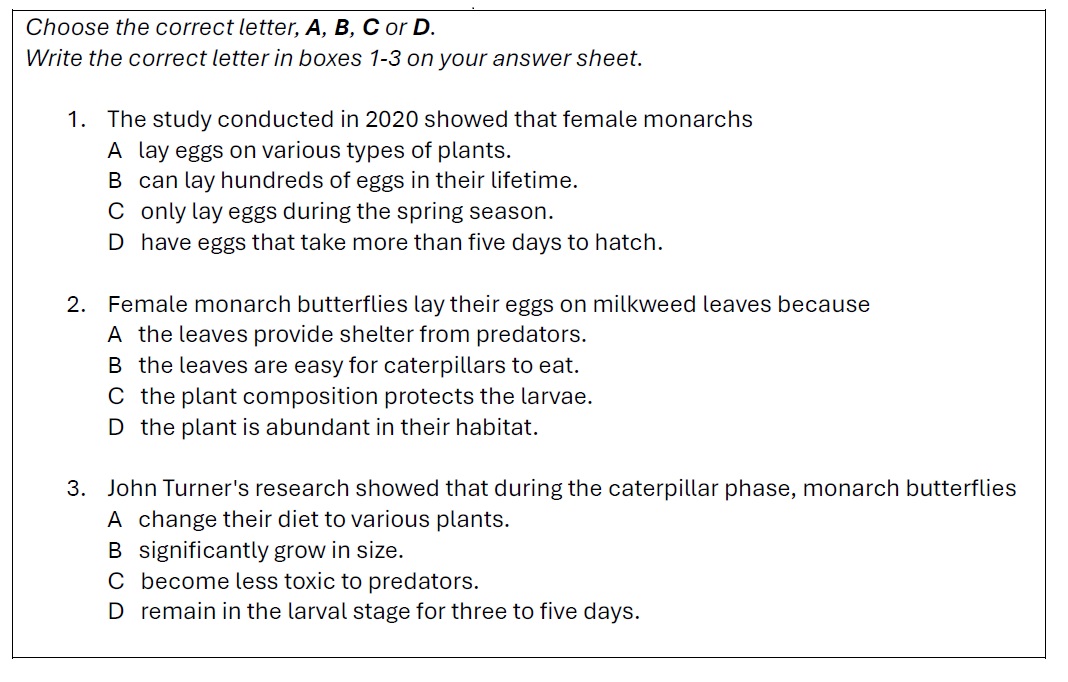
Multiple-choice Questions (MCQs)
What you need to do:
You’ll be given questions or partial statements, and you’ll need to choose the correct answer from the given options.
This question type tests your ability to understand specific ideas or main ideas in the text.
An example:
True/False/Not Given and Yes/No/Not Given
What you need to do:
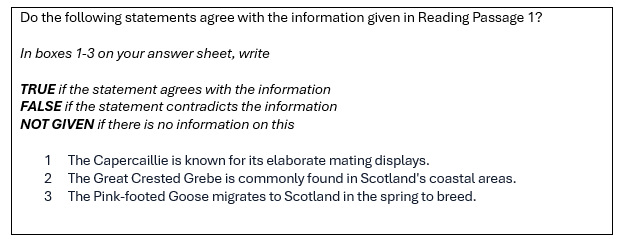
You’ll be presented with a series of statements, and you must decide if each one is True/Yes, False/No or Not given, according to the passage.
Key Differences:
True/Yes means all parts of the statement agree with the passage.
False/No means the statement contradicts the passage.
Not Given means there is no or not enough information in the passage to determine otherwise.
True/False/Not Given questions test your ability to understand factual information in the text.
Yes/No/Not Given questions test your ability to understand the writer’s opinions or claims.
An example:
Matching Headings
What you need to do:
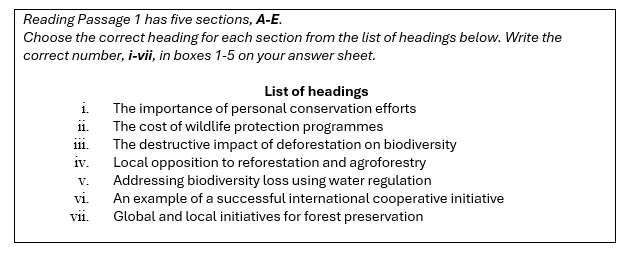
You’ll be presented with a list of headings, and you must match these to the paragraphs in the passage. There is usually an example, so make sure you eliminate it before you start.
This question type tests your ability to understand the general topic of a paragraph and to distinguish between main ideas and supporting ideas.
An example:
Sentence Completion
What you need to do:
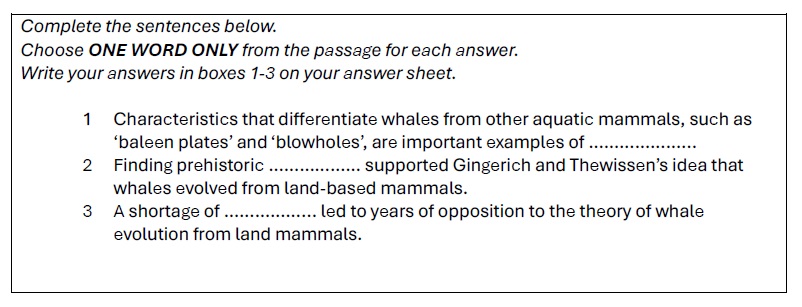
You’ll be presented with a set of sentences, and you must complete them using words from the passage.
This question type focuses on your ability to find specific information and content.
An example:
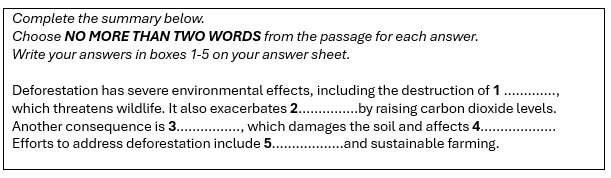
Diagram/Flowchart/Table/Note/Summary Completion
What you need to do:
You’ll be presented with a short summary, a diagram, some notes, a flowchart or a table and you must fill in the gaps by using words from a word list or directly from the passage. The instructions will tell you how many words you can write in the gaps.
These question types test your ability to understand details and/or the main ideas of a part or parts of the text.
An example:
Matching Features
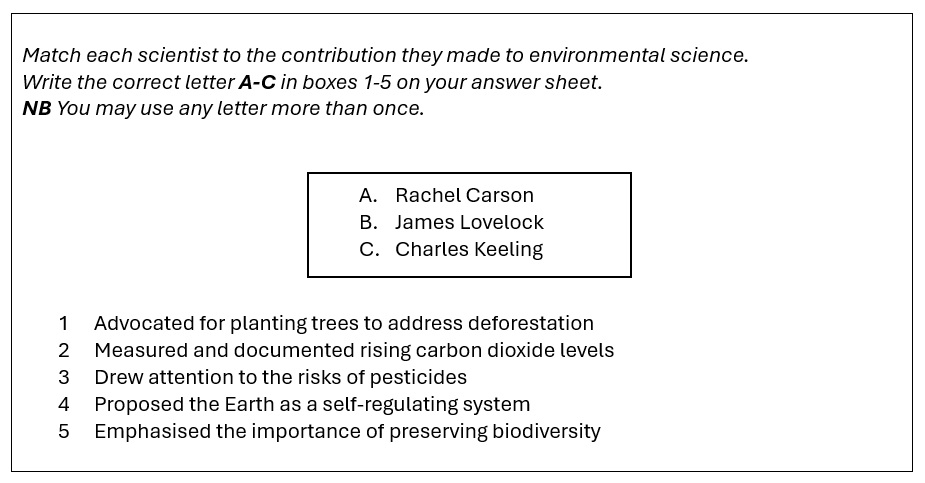
What you need to do:
You’ll be given a series of statements, and you must match them to the correct features (e.g. names, events, or characteristics).
This question type tests your ability to identify and match specific features and detailed information.
An example:
Short Answer Questions
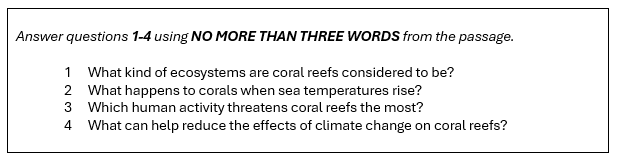
What you need to do:
You’ll be presented with a series of direct questions, and you must answer with words from the passage.
This question type tests your ability to identify and understand specific information in the passage.
An example:
General Tips for IELTS Reading
It’s important to know exactly how to answer the questions in the IELTS Reading test. Take a look at the blog on the instructions for the Reading and Listening sections of the IELTS test, to ensure you know exactly what to expect.
There is no way to know which types of questions will come up on your test day so it’s important to practice all of them. For further practice of question types and reading skills Click here to download our reading lesson pack and read our blog on reading skills.
Finally, by understanding these question types and doing plenty of practice, you’ll be prepared to tackle the IELTS Reading section confidently and achieve your desired IELTS band score.
Click here to join our free monthly IELTS lessons or if you’re in a hurry, Click here to get all our IELTS lessons on demand.
Let us help you prepare for your IELTS test.
Good luck!