IELTS Reading Success Part 2
Welcome to the second part of the blog series on IELTS Reading Success.
In Part 1, we pointed out that the purpose of the Reading Test is to find the answer to the question as quickly as possible. To find this ‘treasure’, we need a ‘map’ to direct us to the part of the text where the treasure is ‘buried’! The first skill that we looked at to help find the treasure was SURVEYING.

If you haven’t read Part 1, you can do so here
In this blog, we are going to look at the next part of the map, and to do this we will look at skill number two: SKIMMING.
2 Skimming
How?
Start by reading and underlining the first and last sentences of each paragraph. The first is often the topic sentence and tells you what the paragraph is about, and the last can be a mini-summary of the paragraph.
As you’re doing this, circle or highlight:
proper nouns i.e. words a capital letter - names of people, place names etc.
numbers – dates, numbers, statistics etc.
This can be useful as some questions may be related to certain people, places, dates, or statistics.
Let’s do some practice
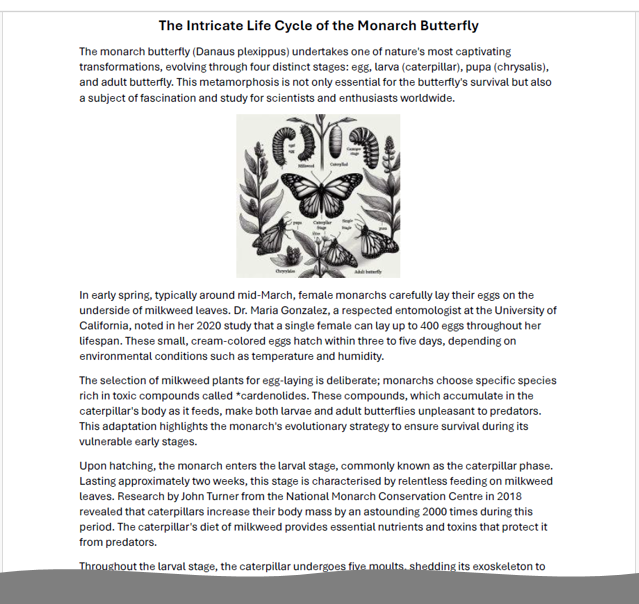
Look at the first page of the text about the Monarch Butterfly. Remember, surveying was done in Part 1, so we already know what the passage is about.
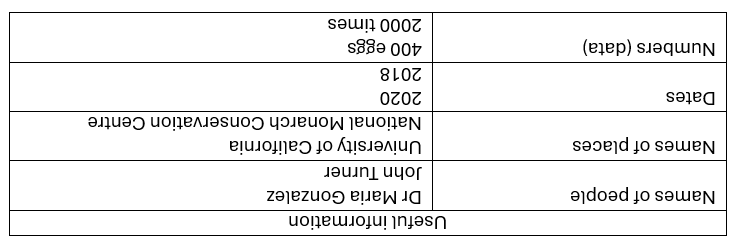
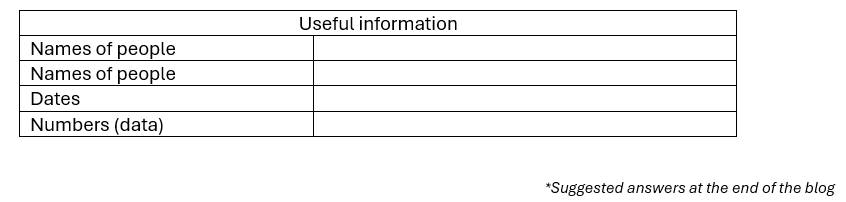
Skim the text quickly and highlight the first and last sentences of each paragraph, and also highlight any proper nouns and numbers. For practice, you can note these down in the table.
Why is this helpful?
Skimming gives you an overall understanding of the passage and a general understanding of the organisation. These two things tell you where information you need is located.
So, to draw on the ‘treasure hunt’ analogy: If we had a treasure map, then we would look out for special features such as trees or rivers. In the text, we also look out for special features. In this case topic sentences, proper nouns and numbers. And now, we are almost ready to dig up the treasure!

Now you’re ready to move onto the next step, the next reading skill.
Keep an eye on the Team IELTS social media for the Part 3 of this series of IELTS Reading Success!
Why not access our IELTS Reading Webinar Lessons on demand here?
*Suggested answers: